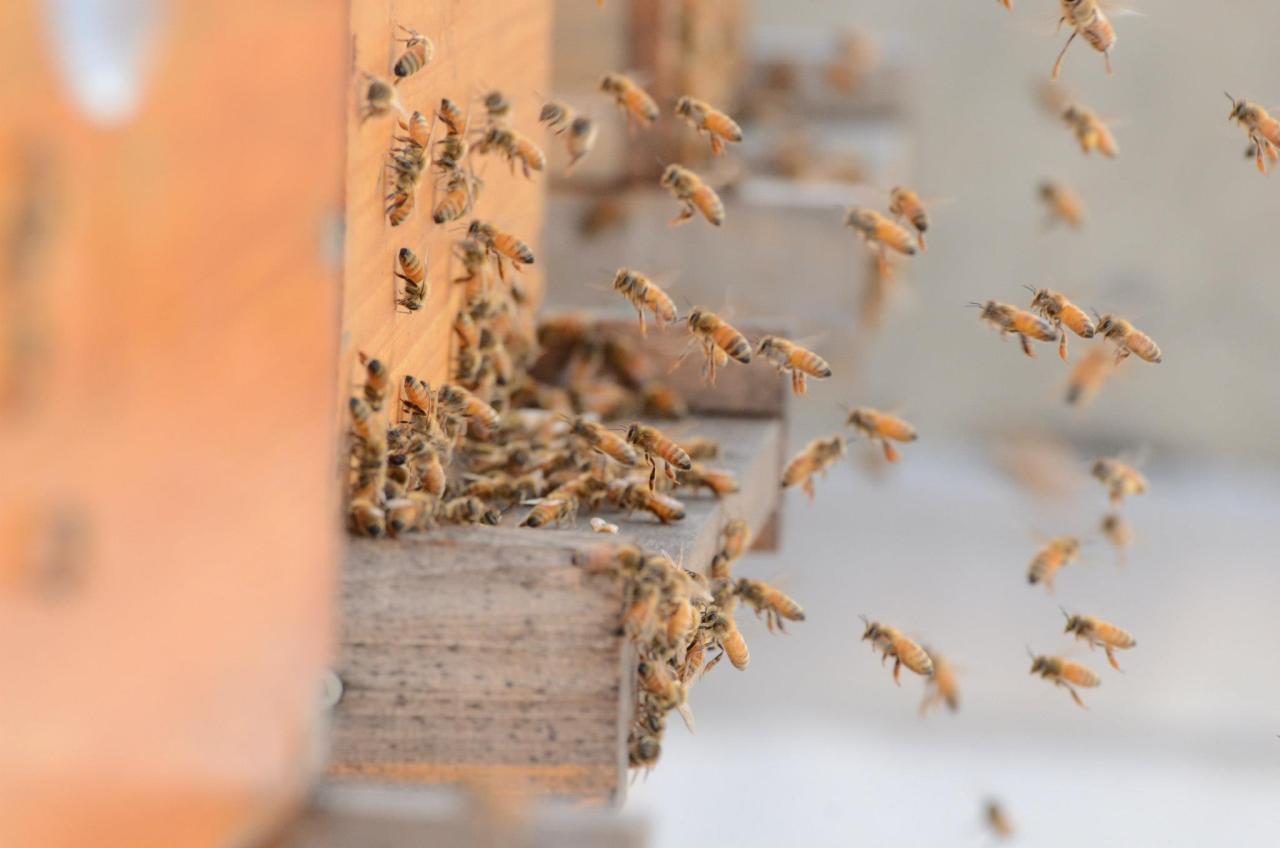
I was very fortunate to assist a beekeeper when I was living in New York. There was even an article about our endeavors: http://www.livescience.com/38198-urban-beekeeping-takes-flight.html
Since they’re social insects, bees are very interesting to me. They follow algorithms very strictly, and if you know the rules you will be able to work with them very well. For example: when bees sting you, their attack chemical is released. This cues the other bees to attack immediately. If you eat bananas, the scent of bananas is very similar to the attack scent. Therefore, it’s useful to skip eating bananas on days when you’ll be checking on the hive.
Also, bees take on different roles as they grow older. For example, a young worker bee might be in the “cleaning” phase of her lifecycle and thus be compulsively cleaning other bees and the comb. Another phase is the “wax” phase when they start to produce the beeswax and use it to build and repair honeycomb. That means you can sometimes guess how old a bee is by what they’re doing.
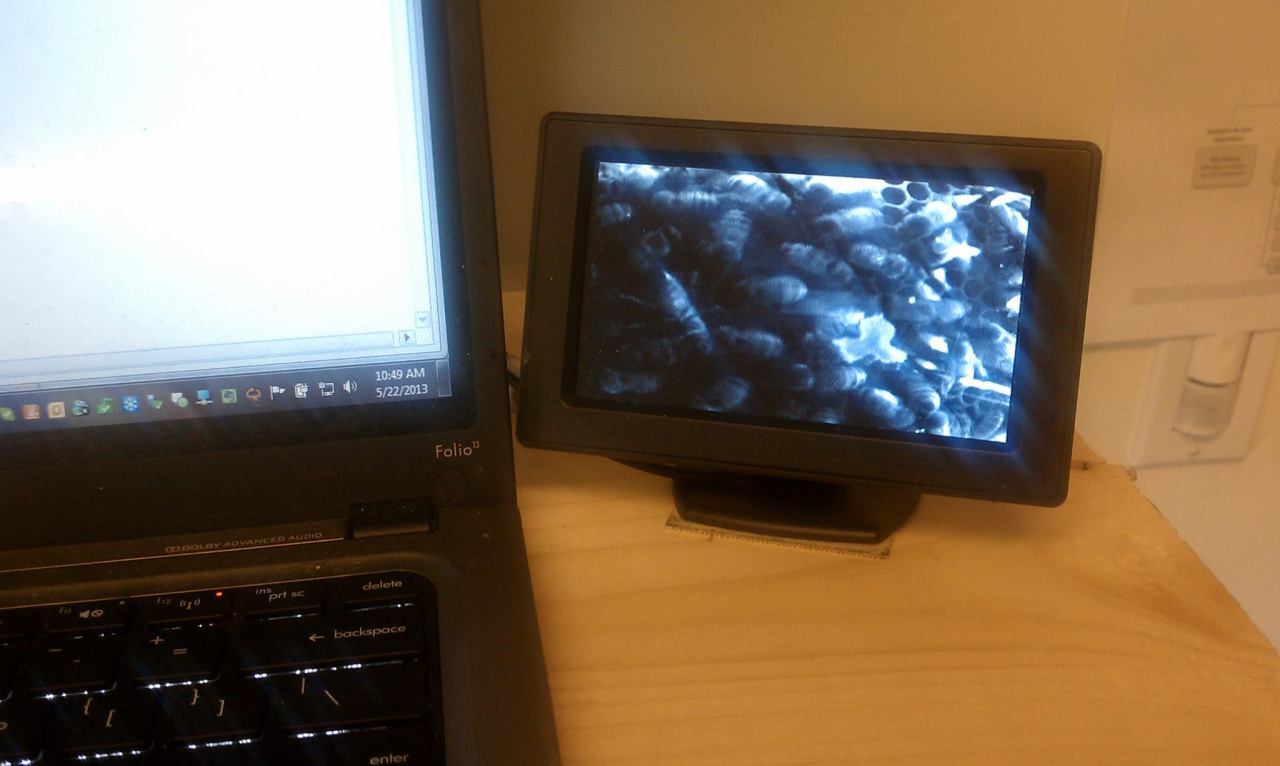
Bees can’t see in infrared, so I placed a small camera inside the heart of the hive to watch the activity. It was streaming to a display on my desk, and also recorded.
In the lower left of the video below, you can see a bee hatching. It’s interesting that none of the other bees assist in any way.
Here’s the little display I had on my desk (was great to look at when on long conference calls):
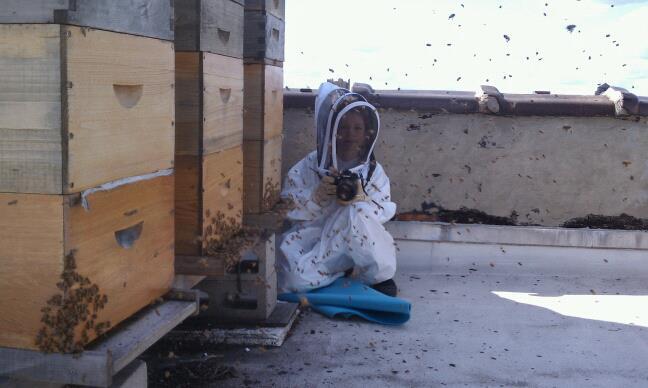
Rachel came to check out the hives and take some pictures.
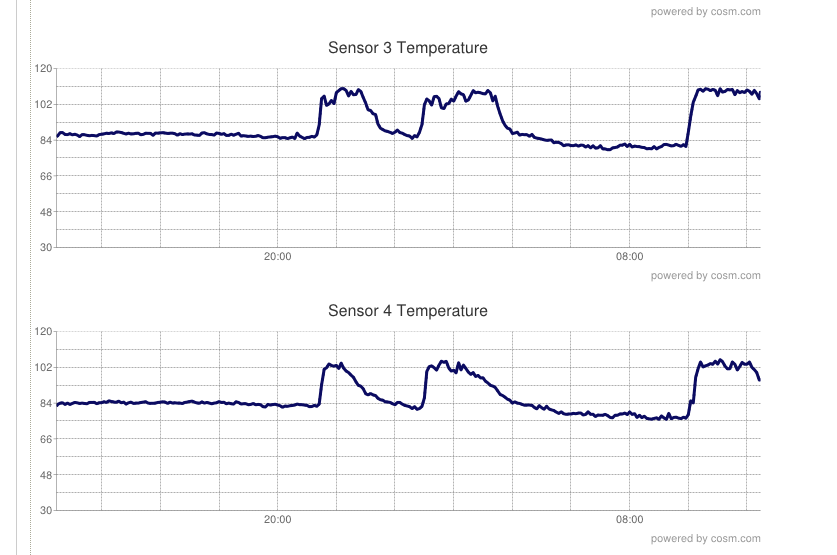
I also had some temperature probes throughout the hives to monitor their health over the winter (bees keep warm by consuming honey and flexing their muscles). It was interesting to see the cluster move around and getting closer or farther to the probes: